Blog/Tree Removal Cost in Savannah, Effingham & Bryan County — 2026 Homeowner's Guide
Tree Removal Cost in Savannah, Effingham & Bryan County — 2026 Homeowner's Guide
The honest answer most homeowners want is a price range — not a sales pitch. So we'll start there. In coastal Georgia, the typical residential tree removal lands somewhere between $400 and $3,500, with most jobs falling in the $700–$1,800 band. Every meaningful estimate comes from an on-site walk, but the ranges below will get you close enough to plan and budget.
We've been on a saw across Effingham County, the Savannah metro, and Bryan County since 1981. This guide is what we wish every customer knew before they picked up the phone — what actually drives the price, what doesn't, and how to spot a quote that's about to creep once the work starts.
Quick answer: typical Savannah-area tree removal prices
The price ranges we see most often across the metro:
- Small tree (under 30 feet): $250 – $600. Crepe myrtles, ornamental trees, smaller pines or oaks in the open.
- Medium tree (30–60 feet): $600 – $1,500. Most residential pines and water oaks, especially with normal access.
- Large tree (60–80 feet): $1,200 – $2,800. Bigger pines and oaks, more rigging if they're close to a house.
- Very large tree (80+ feet): $2,000 – $5,000+. Large live oaks, mature longleaf pines, especially in tight quarters.
- Tree-on-structure (emergency): $1,500 – $5,000+. Pricing depends entirely on what's holding the tree, how much structural damage there is, and whether the utility company needs to de-energize first.
- Stump grinding (add-on): $100 – $400 per stump, depending on diameter and root flare.
These ranges aren't guesses — they're what we've charged for the same kinds of jobs across Guyton, Rincon, Springfield, Savannah, Pooler, Port Wentworth, Richmond Hill, and Pembroke for years. The bands are wide because the variables really do swing the price that much. Here's why.
What actually drives tree removal cost
1. Tree size — height and trunk diameter
Size is the #1 factor, but not the way most people think. It's not just height — it's height combined with trunk diameter and total wood volume. A 70-foot loblolly pine with a 20-inch trunk is a different job than a 70-foot live oak with a 36-inch trunk and a spread that covers the whole front yard. The pine comes out fast; the live oak takes a full day with rigging.
2. Proximity to structures, fences, and power lines
A 60-foot pine in the middle of an open field can come down in pieces with one cut at the base. Move that same pine to within 10 feet of the house and now we're rigging every section, lowering it controlled with ropes, and working in shorter chunks. That can double or triple the time on the job, and the price reflects it.
Power lines are their own thing. If a tree touches or is close to primary lines (the high-voltage feeders on the pole), the utility usually needs to de-energize before we can work safely. That adds time and coordination — and price.
3. Access — can the equipment get to the tree?
Equipment access is the silent variable that surprises homeowners. A backyard pine with no gate access means everything — every limb, every round of trunk — comes out by hand or wheelbarrow through the yard. That's hours of cleanup labor that wouldn't exist if we could pull the trailer up to the tree.
Things that hurt access (and raise the price): no gate, narrow gates, steep grades, soft saturated soil, decorative landscaping in the path, neighbor fences without permission to enter.
4. Species and wood condition
Live oaks weigh more per foot than pines and have denser, harder wood — slower cutting, heavier hauling. Dead trees are often more dangerous than live ones because the structural wood is compromised and you can't trust where it's going to break. Both push price up, even at the same height.
Common coastal Georgia species and rough cost lean:
- Loblolly & longleaf pine: baseline — quick cutting, lighter wood
- Water oak: +10–20% over comparable pine — denser, heavier limbs
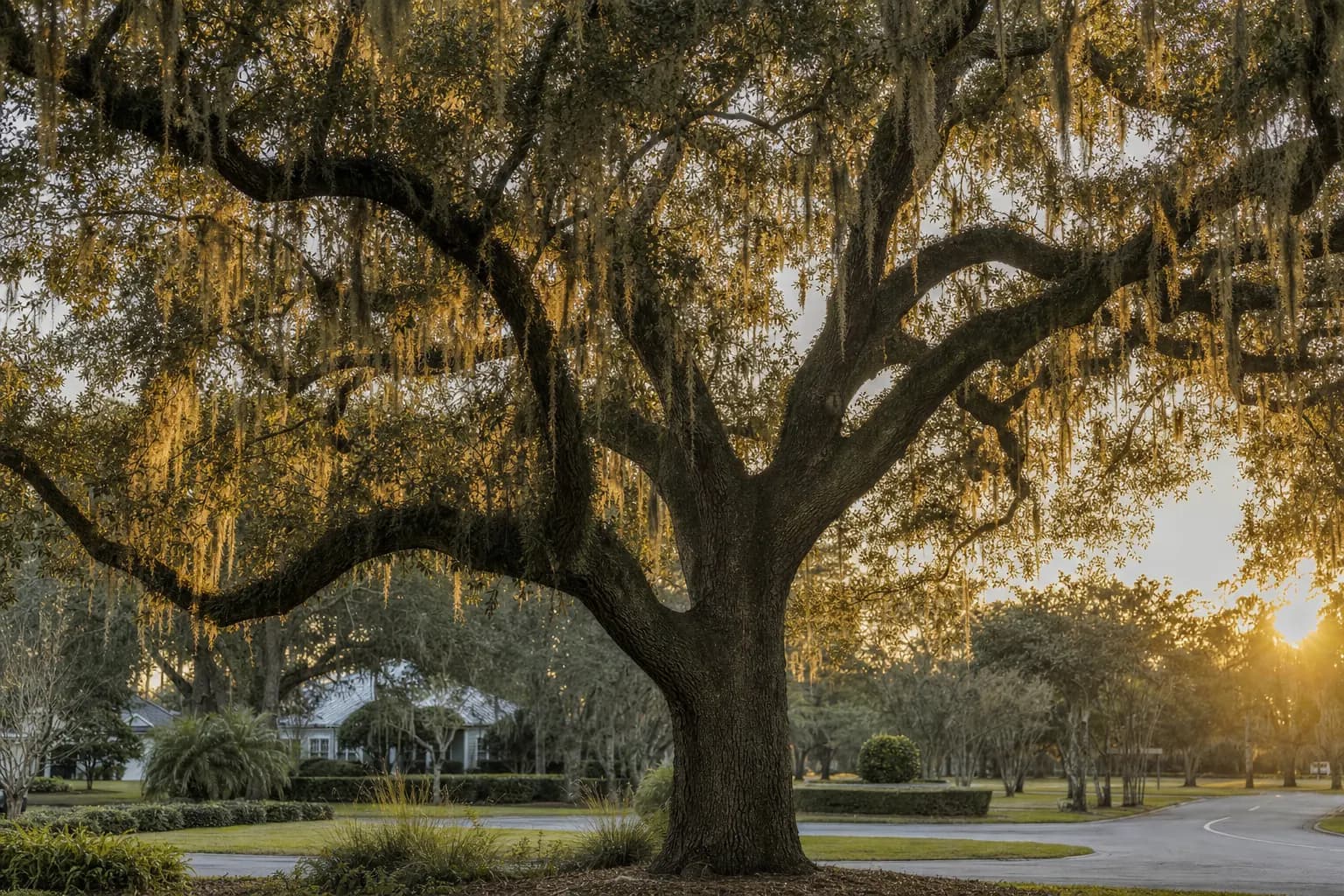
- Live oak: +30–50% over comparable pine — heavy wood, wide spreads
- Pecan: +20–30% — heavy, brittle limbs
- Palm: very variable — fronds are messy but trunks come out clean
- Dead trees: +20–50% on top of the base species cost
5. Cleanup, hauling, and what happens to the wood
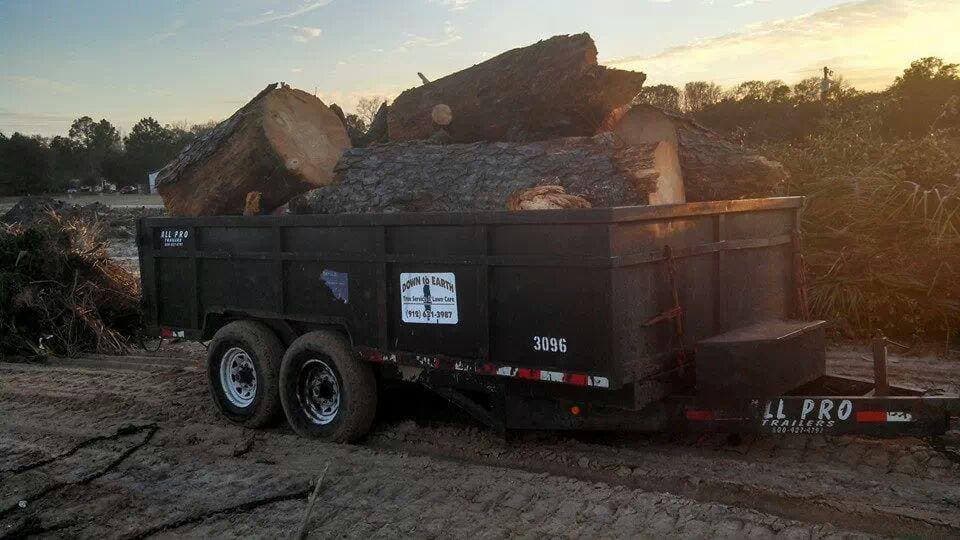
Cleanup is included in our quotes by default — brush chipped, rounds loaded, yard left clean. Not every tree service works that way, so it matters how you compare prices. A $700 quote with cleanup is a completely different deal than a $700 quote that leaves a pile in your driveway.
Some homeowners keep the firewood (the rounds), which can knock a small amount off the haul-off charge. Most don't — the volume of wood from a single mature tree is more than most households can store or use.
6. Stump grinding — usually a separate add-on
Stump grinding is priced separately because not everyone needs it. Most homeowners do — once the tree is down, the stump is the eyesore you wanted gone in the first place. We grind 6–10 inches below grade so you can re-sod, plant new grass, or build over the spot.
Stump grinding cost in our area runs $100–$400 per stump depending on diameter, root flare, and access. Here's when grinding makes sense vs full stump removal.
What does not drive cost (despite what some companies say)
A few things you don't need to pay extra for:
- "Storm risk" surcharges on routine jobs. If a tree is leaning or compromised, that's factored into the baseline price — it's not a separate line item.
- "Premium" insurance fees. Being insured is the baseline. If a tree service is charging you extra to be insured for your job, walk away.
- "Travel" charges within the metro. If you're inside Effingham, Chatham, or Bryan County, the trip to your house is part of doing business — not a line item.
How to compare tree removal quotes
Three quotes is the right number for any non-emergency tree removal. When you get them, compare on these criteria — not just the bottom-line price:
- Is cleanup included? Brush, limbs, sawdust hauled off — or left behind? This is the most common reason a "low" quote ends up higher than a "high" one.
- Is stump grinding included? If not, what does it cost as an add-on? Get that number before you sign.
- Is the price fixed or estimated? A real quote doesn't move after the work starts unless you change the scope. If a company tells you the price "depends on what we find," that's a yellow flag — most tree work is visible from the ground.
- Insurance verification. Ask for a certificate of insurance with your name on it. Any legitimate tree service will send one. If they hesitate or stall, walk.
- Who's on the saw? The person quoting the job isn't always the person doing it. Ask who's actually climbing and cutting, and how long they've been at it.
Free estimates across Effingham, Savannah & Bryan County
We give every customer a free, no-pressure estimate. Steve walks the property with you, explains what the job involves, and quotes it same-day. The number we shake on is the number you pay — unless you change the scope of the job, which is your call.
Want a quote on your tree? Send the details or call Steve directly at 912-631-3987. We cover Effingham County (Guyton, Rincon, Springfield), the Savannah metro (Savannah, Pooler, Port Wentworth, and the islands), and Bryan County (Richmond Hill, Pembroke, Ellabell).
Frequently asked tree-removal cost questions
How much does it cost to remove a pine tree in Savannah?
A typical pine in the 50–70 foot range runs $600–$1,500 to remove, depending on proximity to structures and access. Dead pines tend to run higher because they're less predictable to drop.
How much does it cost to remove an oak tree in Savannah?
Live oaks cost more than pines at the same height because the wood is denser and the spread is wider. A mature live oak removal is commonly $2,000–$5,000+. Water oaks split the difference — closer to large pine pricing.
Is tree removal more expensive after a storm?
Not for the same job — but storm-damaged trees often involve complications (tree on roof, broken trunk in two pieces, hangers in nearby trees) that increase scope. The price reflects the actual work, not a "storm premium."
Will homeowners insurance cover tree removal?
Sometimes — usually only when the tree has caused damage to a covered structure (roof, fence, car). Removing a healthy tree that's just in the way is almost never covered. Storm-damaged trees that fell on the house usually are, up to your policy limits. Always check with your carrier before the work starts.
How long does a tree removal take?
Most residential removals take 2–6 hours, including cleanup. Larger trees with rigging can be a full day. Multi-tree jobs we usually plan across 2–3 days.
Last updated: May 2026. Pricing reflects current operating costs and may vary based on site-specific conditions. The only way to get an accurate number is an on-site walk — which we do for free.
Need a hand?
Free estimate — same day.
45 years of saw work across Effingham, Savannah, and Bryan County. Call Steve directly, or send a quick form and we'll get back today.
Keep reading
Hurricane Tree Prep for Coastal Georgia: Before, During & After the Storm
Hurricane season tree prep, what to do when a tree falls on your house, and how to find a tree service that won't ghost you mid-job. Specific guidance for Effingham, Savannah, and Bryan County homeowners.
How to Tell If a Tree Is Dangerous: A Coastal Georgia Homeowner's Guide
The honest signs that a tree on your property could come down — what to look for, what to do about it, and when to call a professional. From 45 years of reading trees across Effingham, Savannah, and Bryan County.
Stump Grinding vs Stump Removal: What's the Difference and Which One Do You Actually Need?
Most homeowners hear both terms and assume they're the same thing — they're not. Here's how stump grinding works, when full stump removal is worth it, what each one costs in coastal Georgia, and the right call for your yard.